Movement Disorders - Pick your avatar.
Arthritis Injury Innovation Musculoskeletal system VideorecordingsSoftware that generates animated characters with strikingly realistic movement have been part of the entertainment world for some time. But now scientists have taken this one step further to create models that can help kids with cerebral palsy walk better or delay the onset of osteoarthritis.
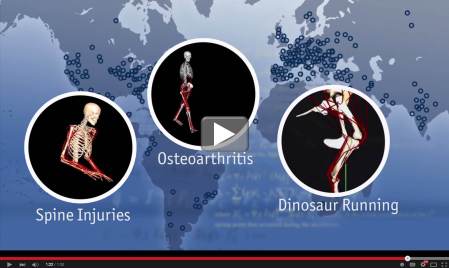
 The researchers behind this video—an entrant in the NIH Common Fund’s recent video competition—have developed OpenSim: a free software tool that combines state-of-the-art musculoskeletal modeling and dynamic computer simulations to produce highly accurate representations of the underlying biomechanics of motion. OpenSim was designed at the NIH-supported center for physics-based Simulation of Biological Structures (Simbios) at Stanford University, Palo Alto, CA. And now, researchers around the world are using OpenSim to find more effective interventions for a variety of movement disorders.
We can link you to the page, however you may need to use your home computer to further access OpenSim as the videos are on YouTube.
 The researchers behind this video—an entrant in the NIH Common Fund’s recent video competition—have developed OpenSim: a free software tool that combines state-of-the-art musculoskeletal modeling and dynamic computer simulations to produce highly accurate representations of the underlying biomechanics of motion. OpenSim was designed at the NIH-supported center for physics-based Simulation of Biological Structures (Simbios) at Stanford University, Palo Alto, CA. And now, researchers around the world are using OpenSim to find more effective interventions for a variety of movement disorders.
We can link you to the page, however you may need to use your home computer to further access OpenSim as the videos are on YouTube.


